diagnosing and treating diseases of the brain.
The Procedure
What is Neurointervention?
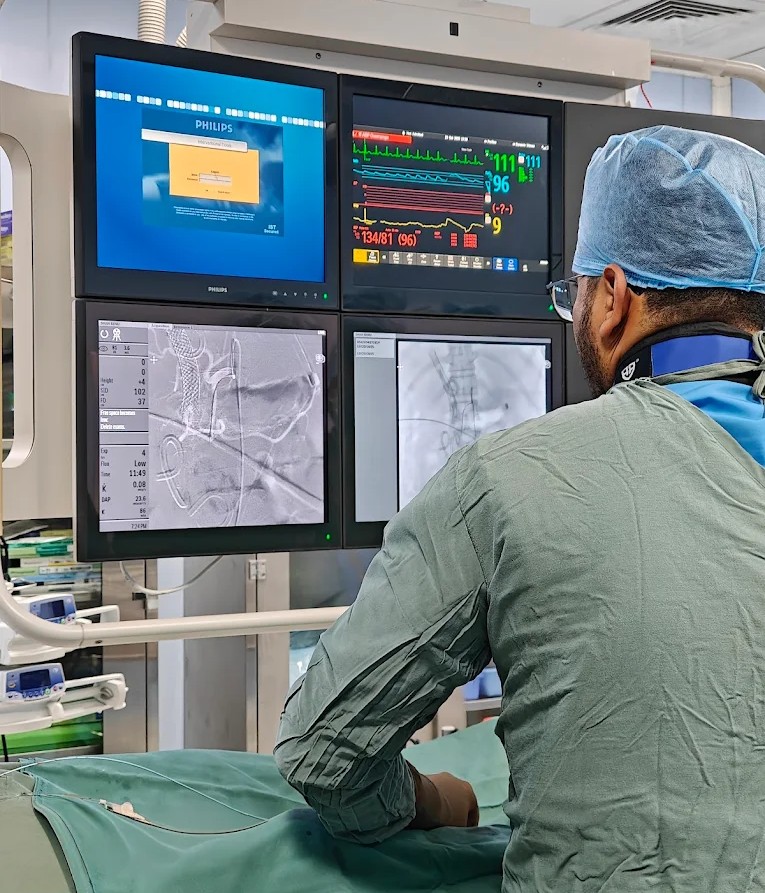
Neurointervention is a highly specialized, minimally invasive field focused on diagnosing and treating diseases of the brain, spine, and nervous system using image-guided techniques. These procedures are performed through tiny catheter-based access, avoiding open brain or spine surgery.
Using advanced imaging guidance, complex neurological conditions can be treated with precision, reduced risk, and faster recovery. Neurointervention offers life-saving and function-preserving treatment options for patients who may otherwise require major surgery.
Conditions Treated
- Brain aneurysms
- Stroke (acute & preventive interventions)
- Arteriovenous malformations (AVMs)
- Carotid artery disease
- Brain and spinal vascular abnormalities
- Neurovascular blockages and narrowing
Why Choose This Approach
Benefits of Neurointervention
Minimally invasive procedures with greater accuracy, reduced pain, lower risk of complications, shorter hospital stays, and faster recovery—ensuring safer treatment and improved comfort.
Journey of Recovery
Your Neurointervention Journey
From precise diagnosis to targeted treatment and faster healing, our image-guided procedures support a smoother recovery with minimal discomfort and a quicker return to everyday life.
1. Neurological Evaluation
Detailed assessment with imaging to understand the condition and treatment plan.
2. Procedure Planning
Advanced imaging is used to map blood vessels and target the affected area safely.
3. Image-Guided Neurointervention
Catheter-based treatment performed through a small access point with precision.
4. Recovery & Follow-Up
Close monitoring followed by recovery guidance and long-term follow-up care.
Why Choose Dr. Vatsal Kania
Dr. Vatsal Kania (MD, FVIR, FINR) is fellowship-trained in Neurointervention, with extensive experience in treating complex neurovascular conditions using minimally invasive techniques.
His training at leading institutes such as Tata Memorial Hospital and Kokilaben Dhirubhai Ambani Hospital enables him to deliver safe, precise, and patient-focused neurovascular care.
- Fellowship-trained in Neurointervention
- Expertise in catheter-based brain procedures
- Advanced imaging-guided techniques
- Compassionate, patient-centric approach
FAQs
Everything you need to know about Neurointervention Procedures
Yes, neurointervention is minimally invasive and generally carries lower risk and faster recovery.
Some procedures may require anesthesia, while others are performed with conscious sedation.
Many patients require a short hospital stay depending on the procedure and condition.
Yes, neurointervention plays a critical role in both emergency and preventive stroke care.
Ready to improve your health?
Schedule your consultation with Dr. Vatsal Kania.