used to diagnose and treat diseases of the aorta—the body’s main
blood vessel—without open surgery.
The Procedure
What is Aortic Interventions?
Aortic Interventions are advanced minimally invasive procedures used to diagnose and treat diseases of the aorta—the body’s main blood vessel—without open surgery.
These image-guided treatments are designed to manage life-threatening aortic conditions with precision, reduced risk, and faster recovery. Catheter-based techniques allow targeted treatment while preserving surrounding healthy tissues.
Conditions Treated
- Aortic aneurysms
- Aortic stenosis and narrowing
- Aortic dissections
- Traumatic aortic injuries
- Pseudoaneurysms
- Aortic blockages
Why Choose This Approach
Benefits of Aortic Interventions
Minimally invasive procedures with greater accuracy, reduced pain, lower risk of complications, shorter hospital stays, and faster recovery—ensuring safer treatment and improved comfort.
Journey of Recovery
Your Treatment Journey
From precise diagnosis to targeted treatment and faster healing, our image-guided procedures support a smoother recovery with minimal discomfort and a quicker return to everyday life.
1. Detailed Diagnostic Evaluation
Comprehensive imaging to assess aortic structure and blood flow.
2. Individualized Treatment Planning
Selection of the most appropriate endovascular approach tailored to the patient.
3. Image-Guided Aortic Procedure
Catheter-based intervention performed under real-time imaging guidance.
4. Recovery & Long-Term Monitoring
Post-procedure care with follow-up imaging and lifestyle guidance.
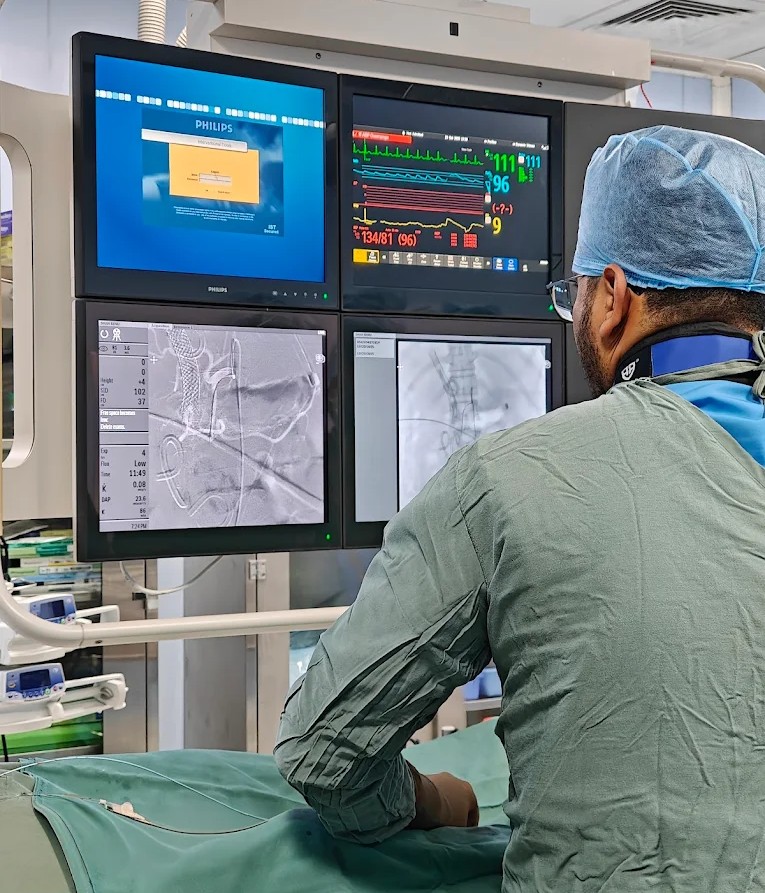
Why Choose Dr. Vatsal Kania
Dr. Vatsal Kania is experienced in managing complex aortic conditions using advanced endovascular techniques that prioritize safety and long-term outcomes.
With fellowship training and experience from leading institutions, Dr. Kania focuses on delivering high-precision care while ensuring patient comfort and confidence.
- Fellowship-trained endovascular specialist
- Expertise in complex vascular anatomy
- Advanced imaging-guided interventions
- Compassionate, patient-first approach
FAQs
Everything you need to know about Aortic Interventions
Yes, in many cases they carry lower risk and faster recovery.
Depending on the procedure, local or general anesthesia may be used.
Most patients resume normal activities much sooner than with open surgery.
Yes, minimally invasive aortic interventions are especially beneficial for high-risk or elderly patients.
Ready to improve your health?
Schedule your consultation with Dr. Vatsal Kania.